Landscape Material Guide
How Much Does a Yard of Gravel Weigh?
A cubic yard of gravel typically weighs around 2,400 to 3,000 pounds, or 1.2 to 1.5 US tons. The actual weight depends on the gravel type, moisture content, particle size, and how tightly the material is packed. Use these estimates to plan your gravel delivery, calculate transportation loads, and prepare for your landscaping project.
Quick Answer
How much does a cubic yard of gravel weigh?
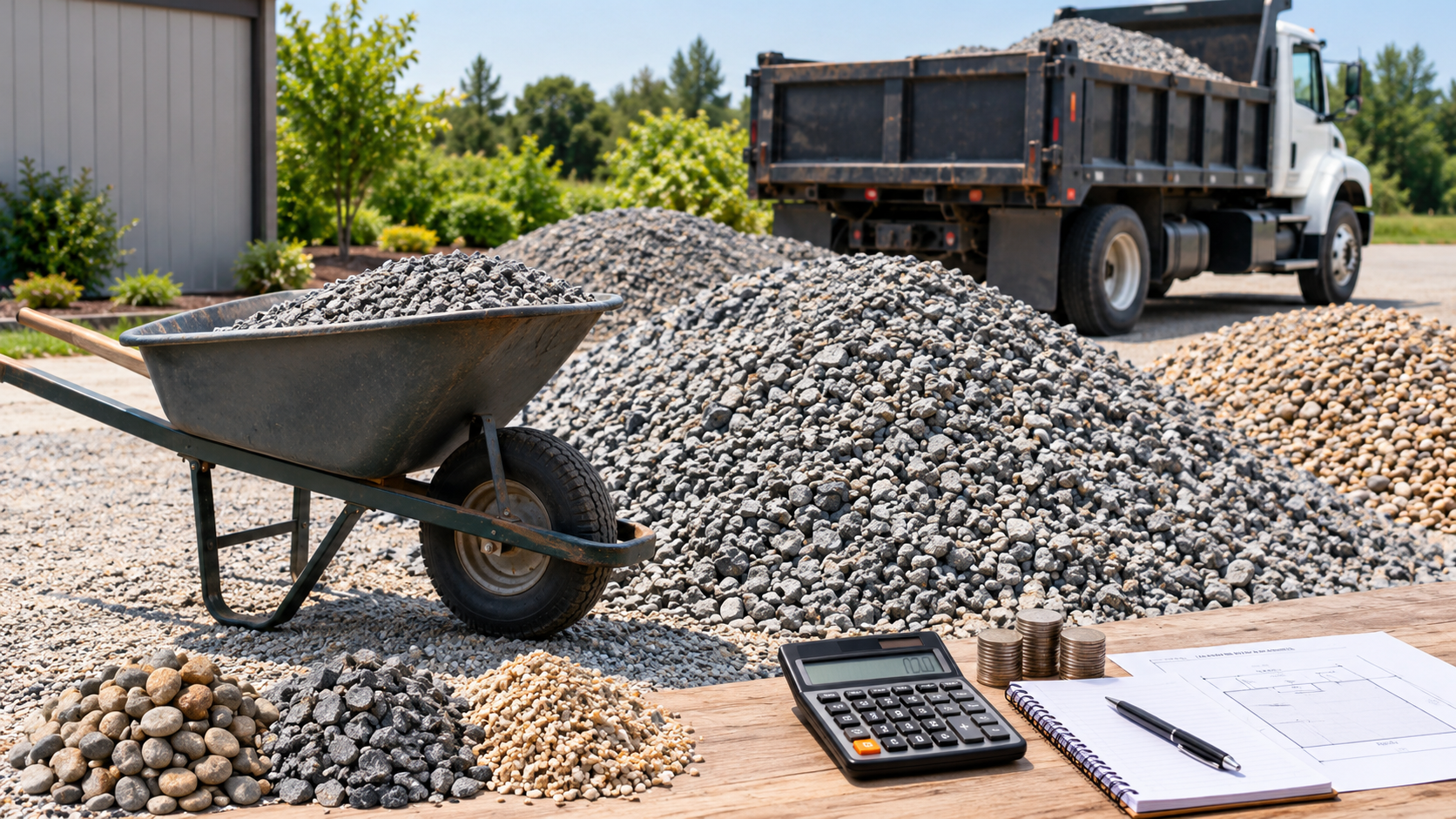
A cubic yard of gravel commonly weighs approximately 2,400 to 3,000 pounds, equal to 1.2 to 1.5 US short tons. Pea gravel may weigh around 2,400–2,800 pounds per cubic yard, while crushed stone may weigh around 2,500–3,000 pounds.
These are general planning estimates. Actual weight depends on the specific material and its moisture content. To estimate the volume needed for your project, use the Nerdds Pea Gravel Calculator and confirm the material's bulk weight with your supplier.
How Much Does 1 Cubic Yard of Gravel Weigh?
A cubic yard measures volume, not weight. It represents a space measuring 3 feet long, 3 feet wide, and 3 feet high, equal to 27 cubic feet. The weight of that volume depends on the type of gravel filling the space.
The following figures are general estimates for planning landscaping and material deliveries. They are not guaranteed weights for every supplier's product.
| Gravel or stone type | Approximate weight per cubic yard | Approximate US tons |
|---|---|---|
| Pea gravel | 2,400–2,800 lb | 1.2–1.4 tons |
| Crushed stone | 2,500–3,000 lb | 1.25–1.5 tons |
| General-purpose gravel | 2,400–3,000 lb | 1.2–1.5 tons |
| Large decorative stone | Varies by rock type and grading | Confirm with supplier |
| Wet gravel | Often heavier than comparable dry gravel | Depends on moisture content |
Actual material specifications can fall outside these ranges. When arranging a delivery or checking vehicle capacity, ask your aggregate supplier for the estimated bulk weight of the exact product you intend to purchase.
How much does a yard of pea gravel weigh?
A cubic yard of pea gravel commonly weighs approximately 2,400–2,800 pounds, depending on its composition, grading, moisture, and packing. Pea gravel consists of small, rounded stones commonly used in garden beds, walkways, patios, and decorative landscaping.
Its rounded shape affects how the particles settle, so its bulk density may differ from that of angular crushed stone. For a more accurate estimate, determine the volume you need and ask your supplier for the bulk weight of the specific pea gravel being sold.
If you are planning a garden path, patio, or gravel bed, use the Pea Gravel Calculator to estimate the required material volume before ordering.
How much does a yard of crushed stone weigh?
A cubic yard of crushed stone may weigh approximately 2,500–3,000 pounds. However, the actual figure depends on the rock type, particle-size distribution, and moisture content.
Crushed stone is commonly used for driveway bases, drainage applications, pathways, and construction projects. Different grades contain different proportions of large stones and fine particles, so two products sold as crushed stone may not have identical bulk densities.
How Many Pounds Are in a Yard of Gravel?
To estimate gravel weight, multiply the volume in cubic yards by the estimated weight per cubic yard. Use a weight estimate that matches your material rather than assuming every type of gravel weighs the same.
For example, suppose you need 3 cubic yards of gravel and your supplier estimates that the material weighs 2,700 pounds per cubic yard.
Your estimated gravel weight is therefore 8,100 pounds, or approximately 4.05 US short tons. This calculation is based on the assumed bulk weight. The actual delivery weight may differ.
How Much Does Half a Yard of Gravel Weigh?
Half a cubic yard weighs approximately half as much as one cubic yard of the same material, provided the bulk density remains the same.
Using a general estimated weight range of 2,400–3,000 pounds per cubic yard:
| Calculation | Estimated weight |
|---|---|
| 0.5 × 2,400 lb | 1,200 pounds |
| 0.5 × 3,000 lb | 1,500 pounds |
Therefore, half a cubic yard of gravel may weigh around 1,200–1,500 pounds. Even a relatively small order can be heavy, so check the payload capacity of your truck or trailer before transporting gravel yourself.
What Affects the Weight of Gravel?
The same volume of gravel can have different weights because of the material's physical properties and the conditions in which it is stored and delivered.
Rock Type
Granite, limestone, and other rocks have different material densities. Two gravel products with similar particle sizes may still have different bulk weights because they contain different rock types.
Particle Size and Grading
Different particle sizes affect how gravel settles and how much empty space remains between stones. A mixture containing fine particles may pack differently from gravel made up mostly of larger stones.
Moisture Content
Water held between or on gravel particles adds mass. Wet gravel generally weighs more than comparable dry gravel, although the difference depends on the amount of moisture present.
Compaction
Compaction changes how much space the gravel occupies. A compacted cubic yard may contain more solid material by mass than a loose cubic yard of the same material.
Supplier Grading
Aggregate products can contain different proportions of fines, medium-sized stones, and larger pieces. These differences can affect the bulk density and estimated delivery weight.
For weight calculations, use the loose bulk density appropriate to the material and the way its volume is measured. Do not automatically apply a compacted density to a loose delivery volume.
How to Estimate the Gravel You Need
Before ordering gravel, calculate the volume of the area you want to cover. For a rectangular area, multiply its length by its width and the required depth.
For example, a path measuring 12 feet long, 4 feet wide, and 3 inches deep requires the following calculation.
Convert the depth
Divide 3 inches by 12 to convert the depth to feet: 3 ÷ 12 = 0.25 feet.
Calculate cubic feet
Multiply length, width, and depth: 12 × 4 × 0.25 = 12 cubic feet.
Convert to cubic yards
Divide by 27: 12 ÷ 27 ≈ 0.44 cubic yards.
The theoretical volume required is approximately 0.44 cubic yards, before accounting for uneven ground, settling, or extra material.
Use the Pea Gravel Calculator to estimate the volume for your project. Once you know the volume, multiply it by your supplier's estimated bulk weight to calculate the approximate load weight.
Nerdds Landscape Calculator
Calculate How Much Pea Gravel You Need
Estimate the gravel volume for your landscaping project before ordering materials. Use your measurements to plan your walkway, patio, garden bed, or other gravel-covered area.
Open Pea Gravel Calculator →Frequently Asked Questions
How heavy is a yard of gravel in tons?
A cubic yard of gravel may weigh approximately 1.2–1.5 US short tons when using an estimated weight range of 2,400–3,000 pounds. One US short ton equals 2,000 pounds. The actual weight depends on the material and its moisture content.
How much does one cubic yard of rock weigh?
The weight of a cubic yard of rock depends on the rock type, particle size, moisture, and packing. Different decorative stones and crushed aggregates should not automatically be assigned the same weight. Ask your supplier for the material's estimated bulk density.
How many pounds are in a yard of gravel?
A cubic yard commonly weighs around 2,400–3,000 pounds as a broad planning estimate. The exact weight varies with the type of gravel, its grading, and its moisture content.
Does wet gravel weigh more than dry gravel?
Yes. Water adds mass, so wet gravel generally weighs more than the same volume of otherwise comparable dry gravel. The difference depends on how much water the material contains.
How much does a yard of pea gravel weigh?
A cubic yard of pea gravel commonly weighs approximately 2,400–2,800 pounds. However, the actual weight depends on the rock composition, particle grading, moisture, and how the material is packed.
How much does a yard of crushed stone weigh?
A cubic yard of crushed stone may weigh approximately 2,500–3,000 pounds. Different rock types and aggregate grades can have different bulk densities, so confirm the estimated weight with your supplier.
Can I transport a cubic yard of gravel in a pickup truck?
It depends on the truck's rated payload capacity and the actual weight of the gravel. A cubic yard may weigh 2,400–3,000 pounds, which can exceed the payload capacity of many pickups. Check your vehicle's payload rating and account for passengers, tools, and other cargo before loading gravel.
How do I calculate gravel weight from cubic yards?
Multiply the number of cubic yards by the estimated weight per cubic yard. For example, 2 cubic yards at 2,700 pounds per cubic yard would weigh approximately 5,400 pounds, or 2.7 US short tons.
Plan Your Gravel Project With Confidence
Understanding gravel weight helps you estimate delivery loads, plan transportation, and order the right amount of material. Start by calculating the volume you need, then use a material-specific weight estimate instead of relying on a universal figure.
The Nerdds Pea Gravel Calculator can help you estimate the required volume, while your aggregate supplier can confirm the expected weight of the gravel you intend to order.
Nerdds Landscape Tools
Estimate Your Gravel Requirements
Calculate the volume needed for your project, check the material's estimated bulk weight, and plan your delivery with more confidence. Always confirm vehicle capacity and supplier specifications before transporting or ordering a large load.
Calculate Gravel Volume →